What Are Scaffolding Couplers?
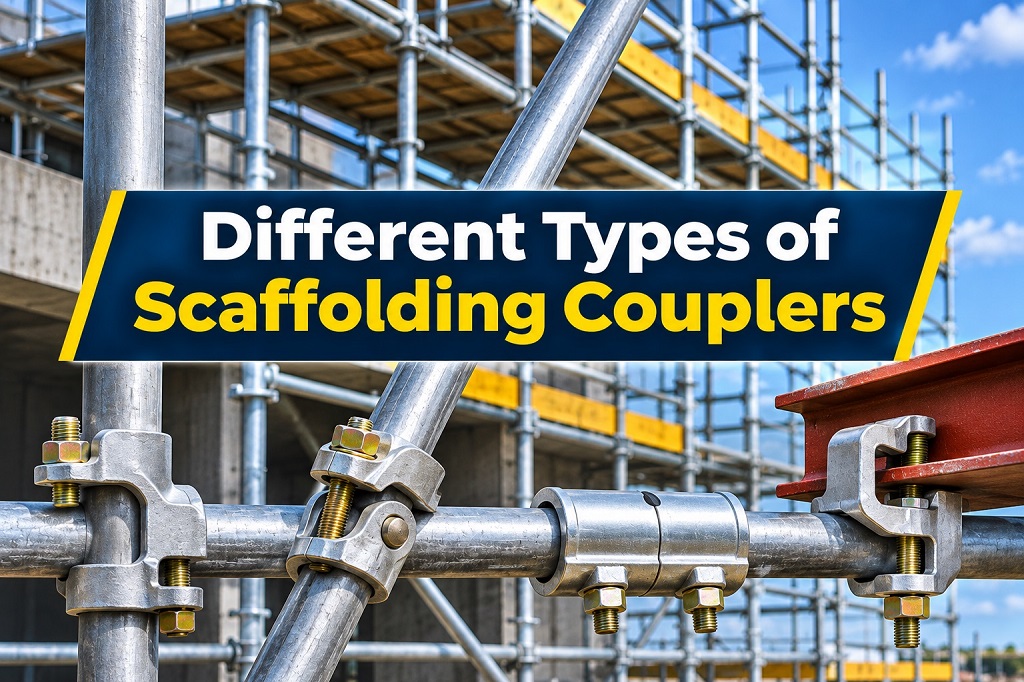
Scaffolding couplers are mechanical fittings used to connect scaffold tubes and form secure joints in tube and fitting scaffolding systems. They allow scaffolders to assemble standards, ledgers, transoms and diagonal braces into structures of different heights and configurations.
Unlike prefabricated scaffolding systems, tube and coupler scaffolding offers considerable flexibility. Individual tubes can be connected at different angles and positions to accommodate building shapes, site conditions and specific structural requirements.
Different types of scaffolding couplers are designed for different connection purposes. Some join tubes at right angles, while others connect tubes at variable angles, extend tube lengths or secure scaffolding to structural steelwork.
Selecting the correct coupler is important for maintaining the stability and structural integrity of a scaffold. The connection type, tube dimensions, coupler performance and installation method must all be considered as part of the overall scaffold design.
Common Types of Scaffolding Couplers
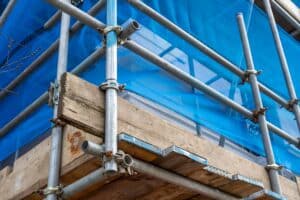
Scaffolding couplers come in several designs, each serving a specific connection function. The following are some of the most commonly used types in tube and fitting scaffolding.
1. Double Couplers (Right-Angle Couplers)
Double couplers, also known as right-angle couplers, connect two scaffold tubes crossing at 90 degrees. They are commonly used to join horizontal ledgers and transoms to vertical standards.
As one of the main structural fittings in tube and coupler scaffolding, double couplers help maintain the alignment and rigidity of the scaffold framework.
They are designed to resist slipping and transmit forces through the connected tubes. Their performance depends on the coupler’s design, strength classification, material and correct installation.
2. Swivel Couplers
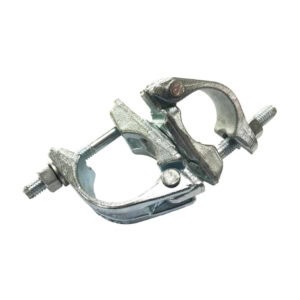
Swivel couplers connect two scaffold tubes crossing at different angles. Unlike double couplers, their rotating design allows the connected tubes to be positioned at various angles.
They are commonly used for diagonal bracing, where scaffold tubes need to cross at angles other than 90 degrees.
Swivel couplers are particularly useful when constructing scaffolding around irregular building shapes, curved structures or other areas requiring flexible bracing arrangements.
3. Sleeve Couplers
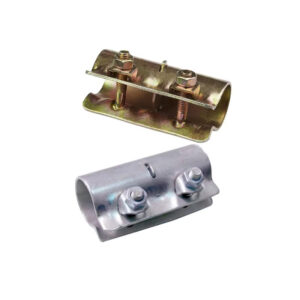
Sleeve couplers connect two scaffold tubes end-to-end along the same axis. They are used when a longer tube assembly is required.
An external sleeve coupler fits around the ends of two tubes and provides a connection between them. The connection must be suitable for the forces involved and installed according to the manufacturer’s instructions.
Sleeve couplers are commonly used in tube and fitting scaffolding where continuous tube lengths are required beyond the length of an individual tube.
4. Parallel Couplers
Parallel couplers connect two scaffold tubes running alongside each other rather than crossing.
They can be used in specific scaffold arrangements where parallel tubes need to be connected or restrained.
Their application depends on the scaffold configuration and the coupler’s tested performance. They should not be treated as a replacement for double or swivel couplers in connections for which those fittings are specified.
5. Putlog Couplers (Single Couplers)
Putlog couplers are used to connect putlogs or transoms to scaffold ledgers in suitable scaffolding arrangements.
Unlike double couplers, which connect and secure two tubes at a right angle, putlog couplers are designed primarily to provide a supporting connection for the transverse member.
They are commonly associated with bricklayer’s scaffolding and other applications where putlogs support scaffold boards or working platforms.
The role of a putlog coupler differs from that of a double coupler, particularly in terms of the structural function of the connection. It should only be used where permitted by the scaffold design.
6. Beam Couplers (Girder Couplers)
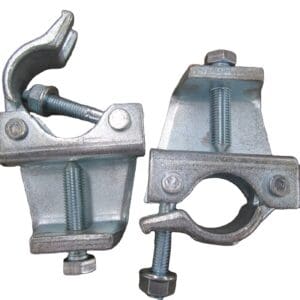
Beam couplers, also known as girder couplers, are used to connect scaffold tubes to structural steel beams or girders.
They provide an attachment point where conventional tube-to-tube connections are not suitable. Depending on their design, beam couplers may be used in pairs or as part of a specifically engineered connection arrangement.
Typical applications include steel-framed buildings, industrial facilities, bridge construction and other projects where scaffolding needs to be connected to structural steelwork.
The supporting beam, attachment arrangement and coupler capacity must be checked as part of the scaffold design. A beam coupler should not be assumed to provide a suitable anchorage without verifying its intended use and performance.
7. Joint Pins (Internal Connectors)
Joint pins, also called internal spigots, are inserted inside the ends of two scaffold tubes to connect them along the same axis.
Unlike external sleeve couplers, which fit around the outside of the tubes, joint pins provide an internal connection.
They are commonly used with compatible scaffold tube systems to extend tube lengths or connect individual tube sections.
The correct joint pin dimensions and retaining arrangements are important. An internal joint pin should not automatically be regarded as a structural moment-resisting connection.
8. Board Retaining Couplers
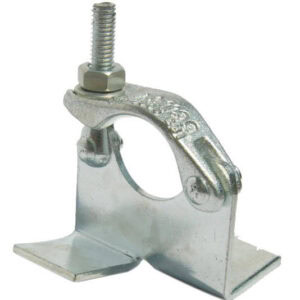
Board retaining couplers are used to help secure scaffold boards and reduce the risk of unwanted movement.
They are different from conventional tube couplers because their main purpose is board retention rather than connecting two structural scaffold tubes.
Depending on the product design, they may attach scaffold boards to supporting tubes or other scaffold members.
Board retention is only one part of platform safety. Scaffold boards must also be correctly selected, supported, positioned and secured in accordance with the applicable requirements.
Scaffolding Coupler Types Compared
Understanding the differences between couplers makes it easier to identify the correct fitting for a particular scaffold connection.
| Coupler Type | Connection | Typical Application |
| Double Coupler | Tubes crossing at 90° | Ledgers and standards |
| Acoplador giratorio | Tubes crossing at variable angles | Diagonal bracing |
| Acoplador de manguito | End-to-end, coaxial tubes | Tube extension |
| Parallel Coupler | Parallel tubes | Specific parallel tube connections |
| Acoplador Putlog | Putlog or transom to ledger | Supporting transverse members |
| Beam Coupler | Scaffold tube to steel beam | Structural steel attachment |
| Joint Pin | Internal end-to-end connection | Tube extension |
| Board Retaining Coupler | Board to scaffold member | Board retention |
The first four types are the main friction coupler categories covered by EN 74-1. Other fittings have different designs and may fall under other standards or product-specific requirements.
Materials and Manufacturing of Scaffolding Couplers
The material and manufacturing process of a scaffolding coupler influence its mechanical performance, durability and service life.
Materiales
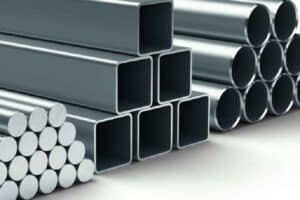
Steel is widely used for scaffolding couplers because of its mechanical properties and suitability for demanding construction environments. Material selection also depends on the required component performance, as discussed in this guide to steel scaffolding grades.
Common considerations include:
- Steel grade: The material must meet the mechanical and chemical requirements specified for the product.
- Strength and toughness: The material must withstand the forces expected during the intended application.
- Corrosion resistance: Surface protection helps reduce deterioration during storage and outdoor use.
Some scaffolding couplers are manufactured from forged steel, while others use pressed or formed steel components. The appropriate manufacturing method depends on the coupler design and its intended performance.
Procesos de fabricación
Common manufacturing processes include:
- Drop forging: Steel is heated and formed under pressure to create components with the required geometry.
- Pressing and forming: Steel components are shaped using mechanical presses and forming tools.
- Machining: Threads, holes and other precision features are produced to meet dimensional requirements.
- Assembly: Bolts, nuts and other components are fitted to complete the coupler.
- Surface treatment: Hot-dip galvanising or other specified protective finishes are applied to improve corrosion resistance.
For buyers sourcing scaffolding couplers in volume, consistent dimensions, reliable bolt assemblies, uniform surface finishes and batch traceability are important quality considerations.
Scaffolding Coupler Standards and Quality Requirements
Scaffolding couplers must be suitable for their intended application and comply with the relevant technical requirements in the target market.
For European and UK markets, EN 74 is an important reference for couplers used in scaffolding and falsework.
EN 74-1:2022+A1:2025
EN 74-1:2022+A1:2025 specifies requirements and test procedures for four main types of friction couplers:
- Right-angle couplers
- Swivel couplers
- Parallel couplers
- Sleeve couplers
It addresses materials, design, strength classifications, resistance, stiffness, testing and assessment.
The standard includes different strength classes, such as A, B, AA and BB, depending on the coupler type and its intended performance.
These classifications should be assessed using the applicable standard requirements and test results rather than assumed from the product’s appearance or material alone.
EN 74-2:2022
EN 74-2:2022 covers certain special couplers, including:
- Screw or wedge half couplers
- Sleeve couplers with shear studs
- Right-angle reduction couplers
- Swivel reduction couplers
These products have different connection arrangements and performance requirements from the common friction couplers covered by EN 74-1.
Not every scaffold fitting automatically falls within EN 74-1 or EN 74-2. Buyers should confirm the applicable standard and supporting documentation for each product.
How to Choose the Right Scaffolding Coupler
Choosing the right scaffolding coupler involves more than selecting a fitting based on its appearance. The connection requirements, tube dimensions and intended structural application must all be considered.
1. Identify the Required Connection
Start by determining how the scaffold tubes need to be connected.
- Use double couplers for right-angle tube connections.
- Use swivel couplers for connections at variable angles.
- Use sleeve couplers for external end-to-end tube connections.
- Use parallel couplers for specified parallel tube connections.
- Use beam couplers for suitable connections to structural steelwork.
The connection must match the scaffold design and the intended function of the fitting.
2. Check Tube Compatibility
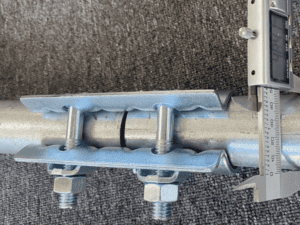
Tube dimensions are an important consideration when purchasing scaffolding couplers.
A nominal outside diameter of 48.3 mm is widely used in conventional tube and fitting scaffolding. However, buyers should also check tube wall thickness, dimensional tolerances and the coupler manufacturer’s specified compatibility.
For international procurement, confirming the tube dimensions before placing an order helps avoid compatibility problems during installation.
3. Consider Strength Classification and Performance
Different couplers have different mechanical performance requirements.
For products covered by EN 74-1, buyers should check the applicable strength classification and supporting test documentation.
Important performance considerations include:
- Slip resistance
- Failure resistance
- Pull-apart resistance, where applicable
- Rotational and bending performance
- Stiffness and load-bearing characteristics
The required performance should be determined by the scaffold design rather than by choosing the highest available classification without considering the application.
4. Evaluate Material and Surface Treatment
The material, manufacturing process and surface finish all influence product quality.
When comparing suppliers, consider:
- Material specifications
- Manufacturing consistency
- Bolt and nut quality
- Galvanised coating consistency
- Corrosion protection
- Dimensional accuracy
These factors are particularly important for rental companies and distributors that need consistent products across repeated orders.
5. Review Quality Documentation
Before purchasing scaffolding couplers in bulk, buyers should request relevant technical documentation.
Depending on the product and market, this may include:
- Product specifications and technical drawings
- Material information
- Applicable test reports
- Standard compliance documentation
- Quality inspection records, including evidence of manufacturing quality control
- Batch identification and traceability information
Checking these documents helps buyers evaluate whether the product is suitable for their intended market and application.
Inspection and Maintenance of Scaffolding Couplers
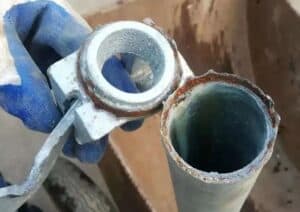
Regular inspection helps identify damaged or deteriorated couplers before they are reused.
Scaffolding couplers should be checked for the following:
- Visible Damage
Look for cracks, deformation, excessive wear or other signs of mechanical damage. Damaged components should be removed from service.
- Bolt and Nut Condition
Check that bolts and nuts are in good condition and can be tightened correctly. Damaged threads, loose components or seized fasteners may affect the connection.
- Corrosion
Inspect for significant rust or deterioration, particularly around contact surfaces, threads and moving parts.
- Clamping Performance
Check whether the coupler closes and grips the tube correctly. A coupler that cannot tighten securely should not be reused.
- Storage and Handling
Store couplers in suitable conditions to reduce exposure to moisture, contamination and unnecessary mechanical damage.
Inspection frequency and acceptance criteria should follow the applicable site procedures, manufacturer’s instructions and local safety requirements. Any coupler suspected of being defective should be segregated and assessed by a competent person.
Conclusión
Scaffolding couplers are essential components of tube and fitting scaffolding systems. Different types serve different purposes, from connecting tubes at right angles and variable angles to extending tube lengths and attaching scaffolding to structural steelwork.
Understanding the differences between double couplers, swivel couplers, sleeve couplers, parallel couplers and other specialist fittings helps contractors and procurement teams select suitable components for their projects.
Beyond product type, material quality, manufacturing consistency, dimensional accuracy and compliance documentation are all important when evaluating a scaffolding coupler supplier.
For contractors, distributors and scaffolding rental companies, working with a reliable manufacturer can help ensure consistent product quality and dependable supply for ongoing projects.
If you are sourcing scaffolding couplers for your business, contact our team to discuss product specifications, manufacturing options and bulk order requirements.
Frequently Asked Questions About Scaffolding Couplers
What Are the Main Types of Scaffolding Couplers?
The four main friction coupler types covered by EN 74-1 are right-angle couplers, swivel couplers, parallel couplers and sleeve couplers. Other commonly used fittings include putlog couplers, beam couplers, joint pins and board retaining fittings.
What Is the Difference Between a Double Coupler and a Swivel Coupler?
A double coupler connects two scaffold tubes crossing at 90 degrees, while a swivel coupler allows tubes to cross at different angles. Double couplers are commonly used for ledgers and standards, whereas swivel couplers are often used for diagonal bracing.
What Is the Difference Between a Sleeve Coupler and a Joint Pin?
A sleeve coupler fits around the outside of two scaffold tubes to connect them end-to-end. A joint pin is inserted inside the tubes to create an internal connection. Both are used for tube extension, but their designs and compatibility requirements differ.
Are Scaffolding Couplers Suitable for 48.3 mm Tubes?
Many conventional scaffolding couplers are designed for tubes with a nominal outside diameter of 48.3 mm. However, compatibility also depends on tube material, wall thickness, dimensional tolerances and the coupler’s specifications. Always check the manufacturer’s technical information before use.
What Standard Do Scaffolding Couplers Need to Meet?
For European and UK applications, EN 74 is a key reference. EN 74-1 covers common friction couplers, while EN 74-2 addresses specified special couplers. The applicable requirements depend on the product type and intended application.
How Often Should Scaffolding Couplers Be Inspected?
Couplers should be checked before use and as part of the scaffold inspection and maintenance procedures. The frequency of formal scaffold inspections depends on local regulations and site conditions. In the UK, HSE scaffolding guidance requires scaffold inspections after installation and at intervals of no more than seven days, as well as after events that could affect safety.