مقدمة
Buying scaffolding for one construction project and buying scaffolding for a rental fleet are two different decisions.
A rental company needs the same equipment to move from one customer to another, survive repeated handling, work across different projects, and return to the yard ready for the next hire. That means the cheapest system is not always the most economical one.
For rental companies, a good scaffolding system should spend more time on hire and less time being repaired, sorted, or sitting unused in the yard.
So what should a rental or hire company really look for when adding a new scaffolding system to its fleet?
What Does a Rental Company Need From a Scaffolding System?
A contractor often evaluates scaffolding around the requirements of a particular project.
How high does the scaffold need to go? What loads must it support? What building geometry does it need to follow? How quickly does it need to be erected?
A rental company has to think further ahead.
The scaffold purchased today may be used on a commercial building this month, an industrial maintenance project next month, and a renovation project after that. Between those jobs, the equipment may be erected, dismantled, transported, unloaded, inspected, cleaned, stored, and dispatched several times.
This creates a very different equipment cycle:
Purchase → Rent → Return → Inspect → Maintain → Rent Again
Every stage matters.
If a scaffold is durable but difficult to rent across different applications, utilization may suffer. If it is versatile but constantly needs repair, maintenance costs increase. If it performs well on site but is difficult to sort and transport, yard operations become less efficient.
A good rental scaffolding system therefore needs to balance several factors rather than excel in only one.
1. Durability for Repeated Rental Cycles
Rental scaffolding has a hard life.
Components are repeatedly loaded onto trucks, transported to construction sites, erected, dismantled, stacked, returned to the yard, and handled again.
They may also be used by many different erection crews. Some customers will handle the equipment carefully. Others may not.
For this reason, durability means more to a rental company than simply whether a scaffold can perform its structural function when new.
Look Beyond the First Project
When evaluating scaffold equipment for a rental fleet, it is worth looking closely at:
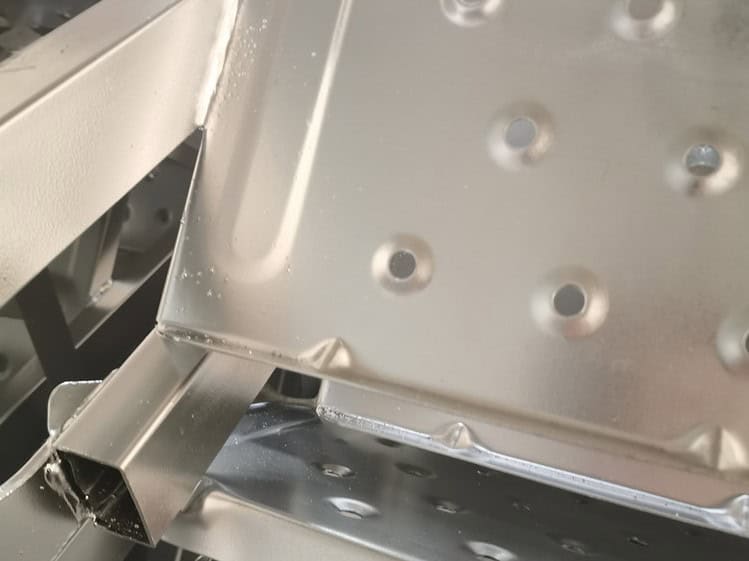
- Steel grade and tube specifications
- Wall thickness
- Welding consistency
- Connection-point quality
- Resistance to deformation
- Platform and deck construction
- Galvanizing quality
- Corrosion resistance
Connection areas deserve particular attention because they are repeatedly engaged and disengaged during erection and dismantling.
The same applies to decks, braces, base components, and other parts that receive frequent handling.
Durability Directly Affects Fleet Availability
Suppose two systems can perform the same job.
One regularly returns to the yard with damaged connections, bent components, or coating problems. The other requires only routine inspection before it can be dispatched again.
The difference is not just maintenance cost.
It is also availability.
The relationship is fairly simple:
Less damage → fewer repairs → more available inventory → more potential rental days
For a rental business, the better question is therefore not only:
“How strong is this scaffold?”
It is also:
“How well will it perform after repeated rental cycles?”
2. Versatility Across Different Customer Applications
A highly specialized scaffolding configuration can be valuable when the right project comes along. This is one reason modular systems such as Ringlock scaffolding, Cuplock, and frame scaffolding are widely found in rental fleets. For rental companies looking for a flexible modular system, our Ringlock Scaffolding System can be configured for different construction and industrial applications.
But what happens when that project ends?
For rental companies, equipment sitting in the yard is equipment that is not generating rental income.
That makes versatility particularly important.
One Fleet, Different Customers
A rental scaffolding system may need to support projects such as:
- Residential construction
- Commercial buildings
- Facade work
- الصيانة الصناعية
- Infrastructure
- Renovation
- Temporary access
- Irregular structures
The wider the practical application range of the core fleet, the more opportunities a rental company may have to put that equipment on hire.
This is one reason modular scaffolding systems such as Ringlock, Cuplock, and frame scaffolding are widely found in rental fleets.
They use standardized components that can be combined in different ways rather than requiring an entirely different equipment set for every application.
Versatility Is Really About Utilization
Rental companies should therefore ask:
Can the same standards, ledgers, braces, decks, and accessories be used across multiple configurations?
Can the system adapt when project geometry changes?
How many specialized components are required?
And most importantly:
How often is this equipment likely to leave the yard?
A system that serves a broader customer base can potentially achieve better utilization than one that is technically excellent but suitable for only a narrow range of projects.
More applications → more potential customers → higher utilization
That is an important difference between choosing scaffolding for a project and choosing scaffolding for a rental fleet.

3. Simple and Fast Assembly for Rental Customers
Rental companies should also think about what happens after the equipment leaves the yard.
The customer has to use it.
For that customer, the rental rate is only one part of the cost. Erection labor, dismantling time, site productivity, and adjustment requirements can all affect the real cost of using the scaffold.
A system that is straightforward to erect can therefore be more attractive to customers.
Standardization Helps on Site
Modular scaffolding systems generally use pre-engineered connection points and standardized components.
Depending on the system, this can mean:
- Fewer loose fittings
- Repeatable connections
- Standard component dimensions
- More predictable erection sequences
- Faster adjustments to common configurations
This does not eliminate the need for competent erection, proper design, or site-specific safety procedures.
It does, however, make the basic system more consistent.
That consistency matters when equipment is being supplied to different customers and different projects.
Familiar Equipment Can Be Easier to Rent
There is also a commercial consideration.
If contractors in a particular market already know how to work with a certain scaffolding system, a rental company may find it easier to place that equipment.
This is why local market habits matter when building a fleet.
A technically impressive system is not automatically the right rental system if customers rarely request it or local scaffold crews are unfamiliar with it.
The best rental equipment sits at the intersection of technical performance and real customer demand.
4. Easy Inspection, Maintenance, and Repair
When a rental ends, the equipment does not simply go back onto the shelf.
It usually enters another operating process:
Return → Sorting → Inspection → Cleaning → Repair → Storage → Next Hire
This part of the rental cycle is easy to overlook when buying equipment, but it has a direct effect on fleet productivity.
Inspection Needs to Be Practical
Rental companies handle large quantities of components.
Inspecting every item becomes easier when damage can be identified clearly and components have consistent dimensions and recognizable features.
A rental-friendly system should therefore make it practical to identify problems such as:
- Bent tubes
- Damaged connection points
- Cracked welds
- Deformed decks
- Damaged locking mechanisms
- Excessive corrosion
- Missing components
Complex parts that are difficult to inspect or repair can increase yard labor and keep equipment out of service for longer.
Turnaround Time Matters
Imagine that one returned batch can be inspected, sorted, and prepared for dispatch in one day, while another requires several days of repair and sorting.
Over a large fleet, that difference adds up.
Rental companies should therefore look beyond the maintenance cost of an individual component.
They should consider turnaround time.
Faster turnaround → greater fleet availability → more opportunities to rent
That makes maintainability an operational issue as much as a technical one.
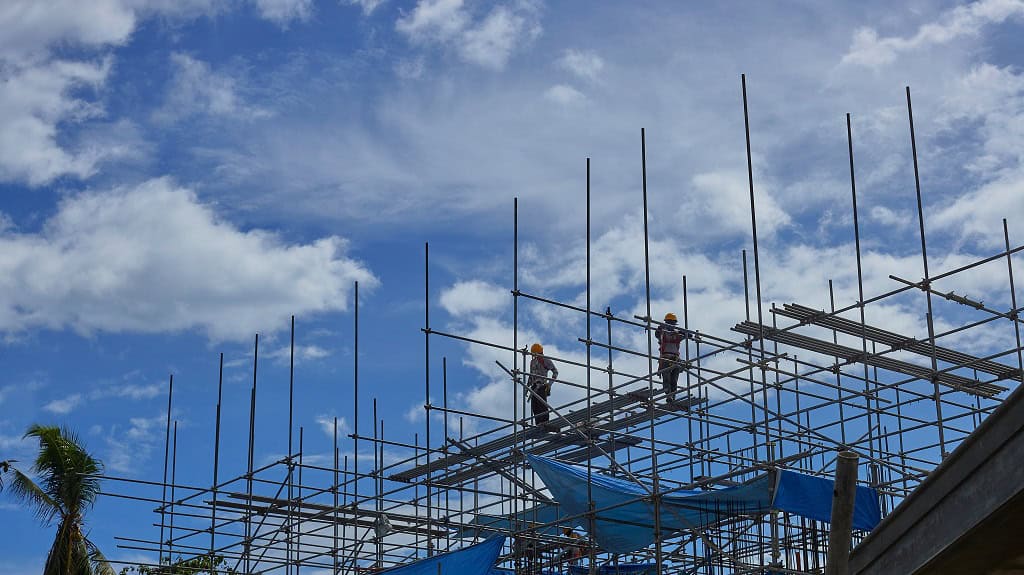
5. Standardized Components Make Fleet Management Easier
A small rental fleet may be relatively simple to manage.
A large one is different.
Once hundreds or thousands of standards, ledgers, braces, decks, base jacks, and accessories are moving between the yard and multiple construction sites, component standardization becomes increasingly valuable.
Too Many Special Parts Create Complexity
A system with many specialized components can lead to:
- More SKUs
- Picking errors
- Missing parts
- Difficult stock counts
- Slow-moving inventory
- Greater storage requirements
Standardization helps reduce this complexity.
If the same core components can be used across multiple scaffold configurations, the rental company can build a more flexible inventory around fewer common parts.
That can make picking, counting, replacing, and expanding the fleet easier.
Will the Next Batch Fit the Current Fleet?
There is another issue that may not become obvious until several years after the first purchase: batch compatibility.
Rental companies rarely build an entire fleet in one order.
They may buy an initial quantity, add more equipment as utilization increases, and continue purchasing replacement parts over several years.
New equipment therefore needs to work with existing stock.
Before selecting a supplier, it is worth asking:
- Will dimensions remain consistent between production batches?
- Will connection designs remain compatible?
- Can individual components be reordered later?
- How are production tolerances controlled?
- What happens if a component specification changes?
For a rental company, manufacturing consistency is not simply a quality-control issue.
It is part of fleet management.
6. Efficient Transport and Yard Storage
A scaffolding rental business is partly an equipment business and partly a logistics business.
Scaffolding is constantly moving:
Rental Yard → Truck → Project → Truck → Rental Yard
Every movement requires labor, space, equipment, and time.
Transport and storage efficiency therefore deserve attention when choosing a system.
Think About How Components Move
Rental companies should consider whether scaffold components can be:
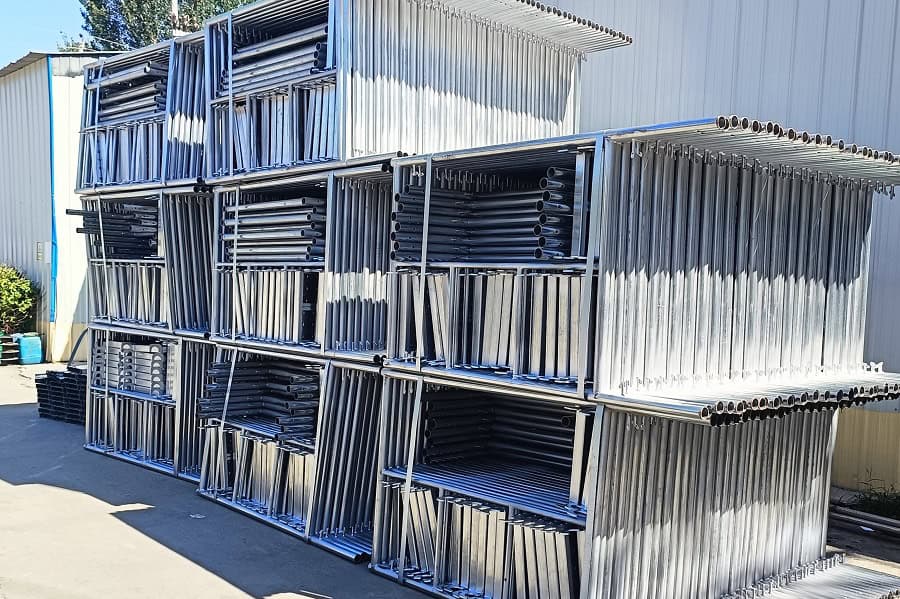
- Stacked efficiently
- Bundled in predictable quantities
- Stored in stillages or racks
- Handled easily by forklift
- Counted without excessive unpacking
- Loaded and unloaded efficiently
A small difference in packing density may not seem important when looking at one bundle.
Across hundreds of deliveries, it can become significant.
Yard Space Is Also a Cost
Rental yards have limited space.
Poorly organized scaffold stock can make it harder to locate components, prepare orders, and count inventory.
Appropriate stillages and storage arrangements can help rental operators:
- Use yard space more efficiently
- Reduce component damage
- Speed up picking
- Improve stock control
- Load trucks more quickly
This is why transport and storage should be considered part of the scaffolding system rather than something to think about after purchasing.
7. Reliable Replacement Parts and Long-Term Compatibility
A construction project has an end date.
A rental fleet may continue operating for many years.
That changes the importance of long-term supply.
A rental company might buy 500 tonnes of scaffolding today, another batch next year, and replacement decks, braces, or standards several years later.
Ideally, all of that equipment should continue working together.
Ask About the Future, Not Just the First Order
Before investing in a system, rental companies should consider:
- Will replacement components remain available?
- Can small quantities of individual parts be reordered?
- Will future production remain compatible?
- Can the supplier maintain the same specifications?
- How will product changes be managed?
This becomes particularly important when a rental company has invested heavily in one system.
Switching to an incompatible system later may create separate inventories, additional training requirements, more SKUs, and equipment that cannot easily be mixed between jobs.
Reliable long-term supply therefore protects more than the next purchase.
It helps protect the value of the existing fleet.
8. Safety, Standards, and Documentation
Rental companies do not always control where or how their equipment will ultimately be used.
That makes consistent product specifications and supporting documentation important.
Applicable requirements depend on the market, scaffold type, configuration, and intended application. These may include standards such as EN 12810, EN 12811, AS/NZS 1576, or relevant OSHA requirements in the United States.
The important point is not simply to see a standard number on a quotation.
Rental buyers should understand what has actually been designed, manufactured, or tested against that requirement.
Documentation Has Practical Value
Useful technical information may include:
- Product datasheets
- Component dimensions
- Load information
- Material certificates
- Test reports
- Installation instructions
- Inspection guidance
- Component drawings
These documents can support more than compliance.
A rental company may use them when answering customer questions, training employees, preparing project submissions, inspecting returned equipment, or confirming that replacement components match existing stock.
Good documentation therefore becomes part of the service that the rental company can provide to its own customers.
9. Look Beyond Purchase Price to Lifecycle Cost
Purchase price matters.
Rental companies still need to buy equipment at a cost that makes commercial sense.
The mistake is treating purchase price as the only number that matters.
Consider two hypothetical scaffolding systems.
| عامل | System A | System B |
| Purchase Price | Lower | Higher |
| متانة | Moderate | عالي |
| صيانة | Frequent | Lower |
| Application Range | محدود | Broad |
| عمر الخدمة | Shorter | Longer |
| Fleet Utilization | Lower | Higher |
At the quotation stage, System A looks more attractive.
But if System B requires fewer repairs, serves more customer applications, remains in the fleet longer, and spends more days on hire, the economics may look very different after several years.
Think in Productive Rental Cycles
A more useful evaluation considers the whole lifecycle:
Purchase Cost + Freight + Maintenance + Replacement + Handling
against factors such as:
Service Life + Rental Cycles + Utilization + Residual Value
This leads to a useful question:
What is the cost per productive rental cycle?
A system that costs 15% more initially but delivers substantially more productive rental cycles may ultimately be the lower-cost asset.
This is why rental companies should be careful about comparing scaffolding purely on price per tonne or price per component.
The equipment needs to earn money after it arrives.
How to Evaluate a Scaffolding System Before Adding It to Your Rental Fleet
There is no universal “best” scaffolding system for every rental company.
The right choice depends on the local construction market, customer mix, existing inventory, project types, applicable standards, and the company’s long-term fleet strategy.
However, several factors should normally be reviewed together.
| What to Evaluate | Why It Matters |
| متانة | Supports repeated rental cycles |
| Versatility | Serves more customer applications |
| Assembly | Improves customer efficiency |
| تقتيش | Shortens return turnaround |
| Standardization | Simplifies inventory |
| Compatibility | Makes fleet expansion easier |
| تخزين | Improves yard efficiency |
| Transport | Reduces handling complexity |
| Spare Parts | Extends fleet service life |
| المعايير | Supports market requirements |
| Documentation | Helps customers and internal teams |
| Lifecycle Cost | Shows the real economic value |
If you are comparing different systems for your rental fleet, you can also review our scaffolding catalogs and component specifications for Ringlock, Cuplock, Kwikstage, and other systems across different markets.
The weighting will be different for every rental company.
A business serving residential contractors may have different requirements from one supplying refineries, infrastructure projects, or industrial shutdowns.
Start with the customers and applications the fleet needs to serve. Then work backward to the system configuration.
Questions to Ask a Scaffolding Supplier Before Buying
The supplier should also be evaluated as part of the system.
A rental fleet is a long-term investment, so the relationship should ideally continue well beyond the first container or first project.
Before placing an order, consider asking:
- Can future batches remain compatible with my existing fleet?
- What steel and tube specifications are used?
- What surface treatment is provided?
- What standards has the system been designed or tested against?
- Can technical and testing documentation be provided?
- Are replacement components available separately?
- How are components packed for international transport?
- Are stillages or storage racks available?
- Can quantities be configured around an existing rental fleet?
- Can the supplier support future fleet expansion?
- How is dimensional consistency controlled between production batches?
The answers can reveal a lot about whether a supplier is suitable for a one-time order or capable of supporting a rental fleet over the longer term.
For a rental fleet, these questions matter because the equipment may be expanded and replenished over many years. You can review our scaffolding manufacturing process to see how APAC handles cutting, welding, surface treatment, and quality control before delivery.
Conclusion: Good Rental Scaffolding Needs to Keep Earning
For a rental company, scaffolding is not simply construction equipment. It is a revenue-generating asset.
A good rental scaffolding system needs to survive repeated handling, work across different applications, remain easy to inspect and maintain, move efficiently through the yard, and stay compatible as the fleet expands.
Purchase price still matters. But over the life of the equipment, utilization, maintenance, turnaround time, service life, and productive rental cycles often tell a more useful story.
The goal is simple:
Keep more equipment available. Keep it on hire longer. Keep the fleet productive.
If you are building a new scaffolding rental fleet or expanding an existing one, APAC can help review the system configuration, component quantities, packing, stillages, technical documentation, and long-term supply requirements based on your market and customer applications.
التعليمات
What is the best scaffolding system for rental companies?
There is no single scaffolding system that is best for every rental business. The right choice depends on local customer demand, project applications, existing fleet compatibility, applicable standards, and rental strategy. Ringlock, Cuplock, frame scaffolding, and other systems can all have a place in rental fleets.
Why is modular scaffolding suitable for rental companies?
Modular scaffolding uses standardized components that can be combined into different configurations. This makes it possible for the same core fleet to serve multiple applications while simplifying inventory, replacement, and future fleet expansion.
Why is Ringlock scaffolding popular with rental companies?
Ringlock scaffolding combines standardized components with flexible configurations and relatively straightforward connections. This allows the system to be adapted to a wide range of construction, infrastructure, and industrial applications. Its suitability still depends on local market demand and the applications a rental company serves.
Should rental companies choose scaffolding based on purchase price?
Purchase price should be considered, but not in isolation. Service life, maintenance requirements, fleet utilization, transport, storage, replacement costs, and expected rental cycles all influence the real cost of the equipment.
Why is component compatibility important for a rental fleet?
Rental fleets are often expanded over several years. Compatible components allow new equipment to be integrated with existing stock rather than creating separate inventories. This can simplify stock management and protect the value of earlier purchases.
How can rental companies extend scaffolding service life?
Regular inspection, proper storage, careful handling, timely repair, suitable corrosion protection, and access to replacement parts can all help extend usable service life. Clear inspection procedures are also important for identifying damaged components before they return to service.
What documentation should a scaffolding rental company request?
The required documentation depends on the market and scaffold system, but it may include technical datasheets, component drawings, load information, material certificates, test reports, installation instructions, and inspection guidance. Applicable standards should also be confirmed for the intended market and application.