Introduction
Scaffolding inspection is not just a regulatory requirement—it’s a vital safety protocol that protects lives, ensures project continuity, and prevents costly OSHA violations. This guide breaks down what construction professionals need to know about proper inspection routines, who is responsible, and how to maintain compliance through detailed checklists and best practices.
Why Scaffolding Inspections Are Essential
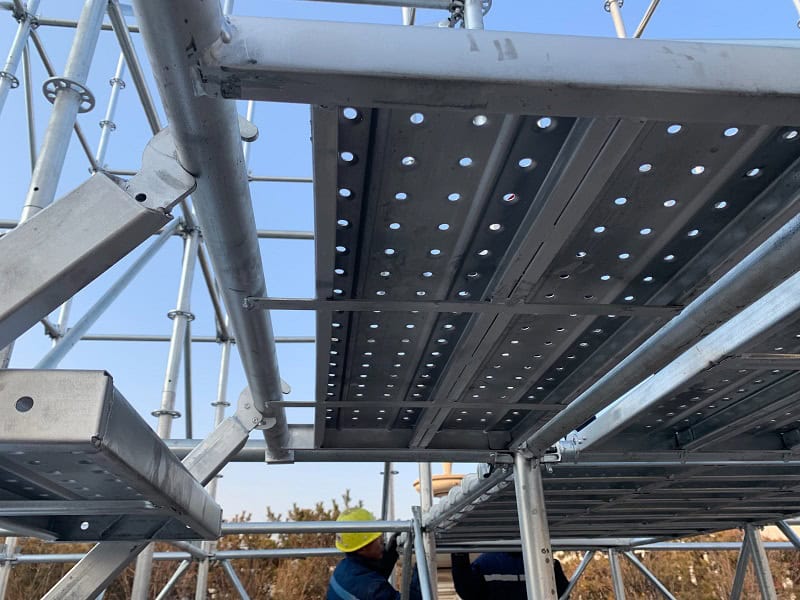
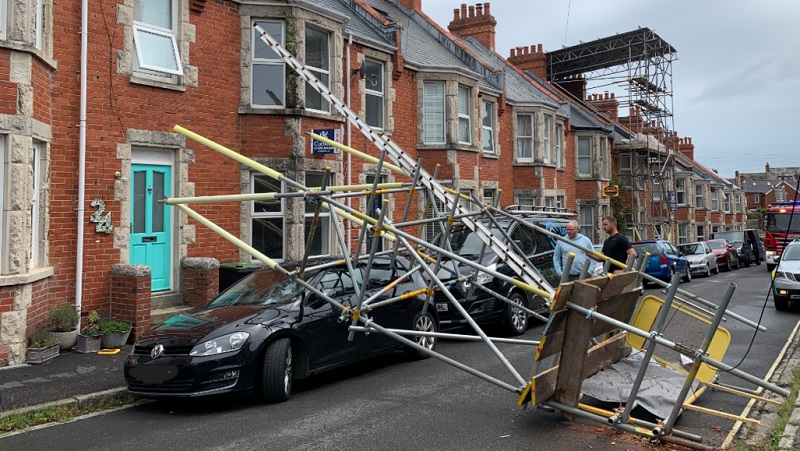
In construction, scaffolding provides essential access to elevated work areas, but it also introduces high-risk environments. According to the U.S. Bureau of Labor Statistics, over 70% of scaffolding-related injuries are due to platform failures, slipping, or falling components—most of which are preventable through thorough inspections.
To mitigate these risks, OSHA mandates strict scaffolding inspection rules that every general contractor, safety officer, and site supervisor must follow.
Who Is Responsible for Scaffold Inspections?
Only a “competent person”, as defined by OSHA, is authorized to perform scaffolding inspections. This individual must:
-
Have the experience and training to identify existing or predictable hazards.
-
Be empowered to take prompt corrective action.
-
Understand all aspects of scaffold construction, including load ratings, component safety, and environmental hazards.
Before any scaffold is used, a visual inspection must be performed at the start of each work shift, and after any event—such as high winds or impact from equipment—that could compromise structural integrity.
OSHA Scaffolding Inspection Requirements
Below are the essential OSHA-compliant inspection points:
1. Daily and Event-Based Inspections
-
Inspect scaffolds before each shift.
-
Re-inspect after storms, impacts, or structural alterations.
-
Ensure all components are evaluated—even if not used the day before.
2. Load Capacity
-
Scaffolds must support at least 4 times the maximum intended load.
-
Never overload planks or platforms with materials or personnel.
3. Guardrails and Fall Protection
-
Guardrails are required at heights over 10 feet.
-
All open sides must have toprails (38–45 in.), midrails (20–30 in.), and toeboards.
-
Use fall arrest systems in combination with guardrails for suspended scaffolds.
4. Platform Safety
-
Platforms must be fully planked, secured, and free of debris.
-
Inspect for cracks, warping, or insufficient overlap.
-
Ensure planks are cleated or otherwise fastened to prevent movement.
5. Footings and Foundation
-
Scaffolding must sit on level, stable ground using base plates and mud sills.
-
Watch for shifting soils, undermined bases, or missing footings.
Scaffold Component Checklist
Here’s a breakdown of key scaffold elementsthat must be inspected:
| Component | Check For |
|---|---|
| Braces & Frames | Missing, loose, or misaligned bracing |
| Standards (Uprights) | Bends, rust, incorrect spacing |
| Ledgers & Transoms | Leveling issues, loose joints |
| Couplers & Connectors | Damaged, incompatible, loose attachments |
| Putlogs & Bridles | Wrong spacing, incorrect couplers |
| Boarding (Decks) | Incomplete coverage, warped or cracked boards |
| Ties | Insufficient number or loose connections |
| Guardrails & Toeboards | Missing or damaged safety barriers |
| Ladders & Access Points | Not secured, insufficient height, unsafe entry |
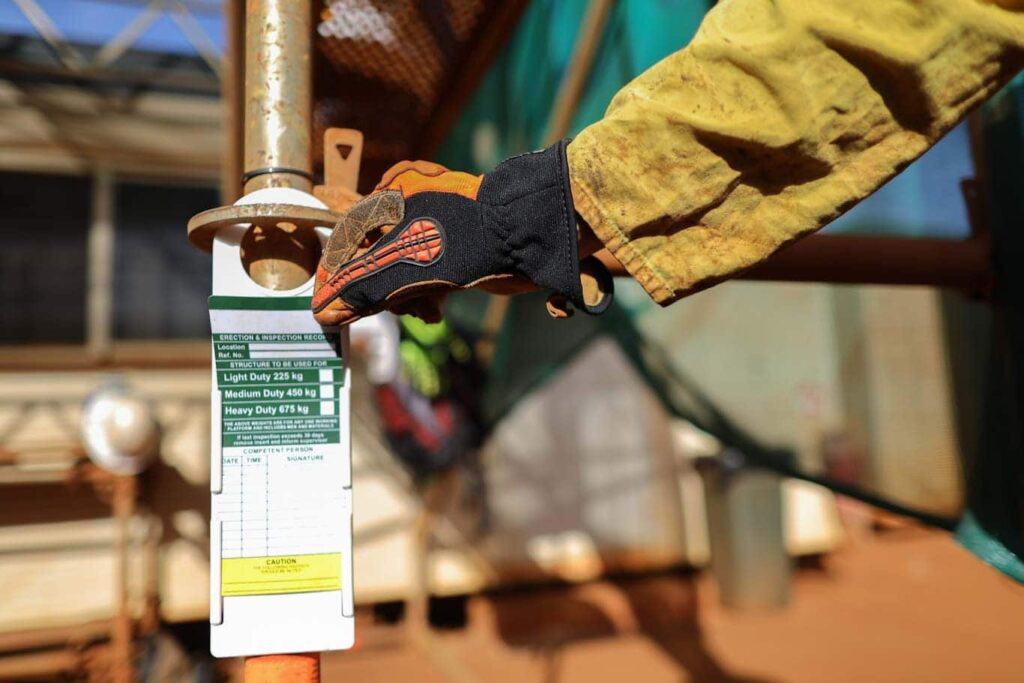
Scaffold Inspection Tags: A Visual Safety Tool
Inspection tags provide immediate visual indicators of scaffold safety status:
-
🟩 Green Tag – Safe to use
-
🟨 Yellow Tag – Restricted use (e.g., limited capacity or pending repair)
-
🟥 Red Tag – Do not use; scaffold is unsafe
Each tag must include:
-
Inspector’s name
-
Date of last inspection
-
Any identified hazards or usage limitations
👉 Learn more about scaffold tag systems here
Frequency of Scaffold Inspections
| Type | Frequency |
|---|---|
| Daily Pre-Use | Before each work shift |
| Post-Incident | After wind, impact, or modification |
| Weekly | Every 7 days minimum (OSHA standard) |
| Long-Term Projects | As dictated by risk and project length |
Inspections should be documented and signed, with corrective actions taken immediately when faults are found.
Why Regular Scaffold Inspections Save Lives
Failures in scaffold stability often lead to falls, equipment damage, or complete collapses—posing danger not only to workers but to bystanders and the project timeline.
Regular inspections allow you to:
-
Prevent fatal accidents
-
Avoid costly OSHA fines and shutdowns
-
Extend the life of scaffold materials
-
Improve trust with your project stakeholders
Frequently Asked Questions (FAQ)
Q1: Who qualifies as a competent person for scaffold inspections?
Someone with training and experience in scaffold safety who is authorized to identify and correct hazards.
Q2: Are scaffold inspections mandatory even for short-term projects?
Yes. OSHA requires daily pre-shift inspections regardless of project duration.
Q3: Can I rely on color tags alone for scaffold safety?
No. Tags are visual aids; a full inspection by a competent person is still required daily.
Q4: What’s the most common inspection failure point?
Loose or missing bracing and unsecured planking are leading causes of scaffold-related incidents.
Q5: How can I train my team on scaffold inspection best practices?
OSHA-aligned training programs and certification courses are available online and in person. Ensure your team knows how to inspect and document safely.