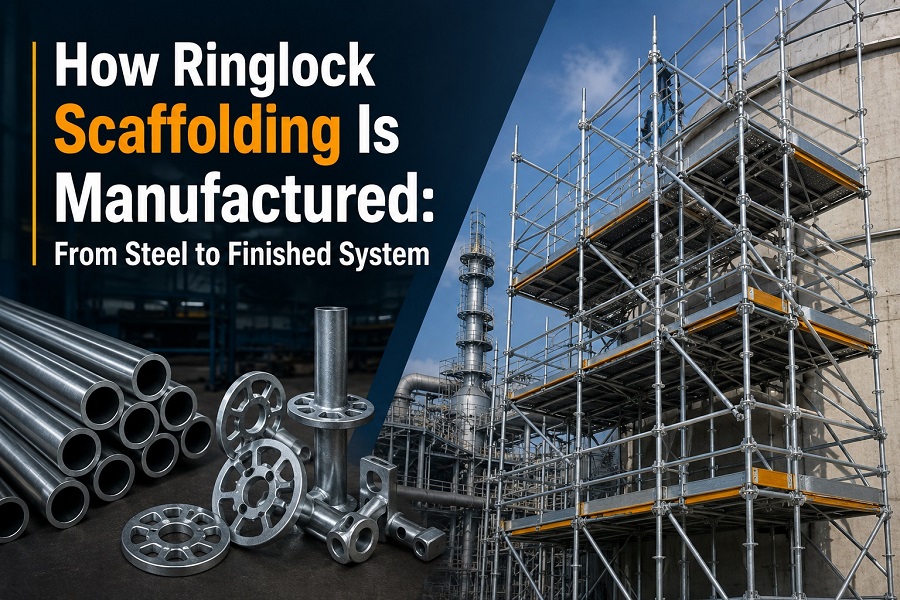
Introduction
Ringlock scaffolding is one of the most widely used modular scaffolding systems in construction, infrastructure, industrial maintenance, and access projects. It is known for fast assembly, strong load transfer, flexible layout, and reliable connection performance.
A complete ringlock scaffolding system is made of several key components, including standards, ledgers, diagonal braces, rosettes, base collars, jacks, platforms, and accessories. These parts connect through a rosette and wedge locking mechanism to form a stable temporary structure. Ringlock systems are commonly described as modular scaffolding systems using vertical standards, horizontal ledgers, and diagonal braces connected through rosette connectors.
But high-quality ringlock scaffolding does not come only from a good design. It also depends on material selection, accurate fabrication, reliable welding, surface treatment, inspection, and packaging. As a professional scaffolding supplier, APAC Scaffold focuses on each manufacturing step to deliver durable ringlock scaffolding systems for international projects.
Main Components of Ringlock Scaffolding
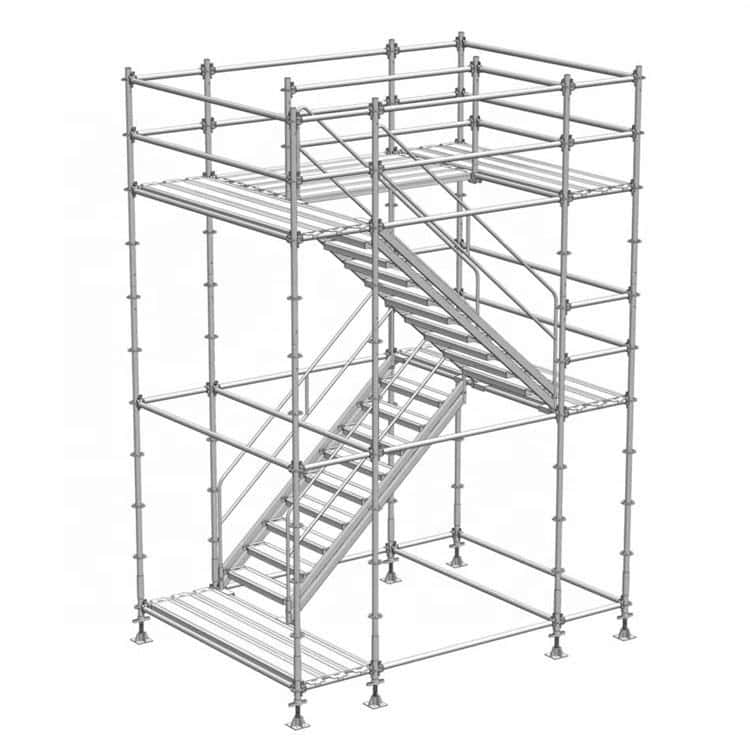
Before understanding the manufacturing process, it is useful to know the main parts of a ringlock scaffolding system.
Common ringlock scaffold components include:
- Standards
- Ledgers
- Diagonal braces
- Rosettes
- Wedge pins
- Base collars
- Base jacks
- U-head jacks
- Steel planks or platforms
- Stair systems and accessories
The rosette is one of the most important parts of the system. It allows ledgers, braces, and other components to connect around the standard from different directions, helping the scaffold adapt to different building shapes and project layouts. Some ringlock systems use rosettes with multiple connection holes to allow flexible assembly angles.
Step 1: Steel Material Selection
The first step in ringlock scaffolding manufacturing is selecting suitable steel materials. Steel quality affects strength, welding performance, forming quality, and long-term scaffold reliability.
Common steel grades used in scaffolding may include Q235, Q355, S235, S275, or S355, depending on project requirements, target market, and design load. For heavy-duty or demanding applications, higher-strength steel may be selected for key load-bearing components.
However, steel grade alone does not determine scaffold quality. Buyers should also pay attention to material certificates, dimensional accuracy, welding quality, surface treatment, and inspection reports.
Step 2: Cutting and Forming
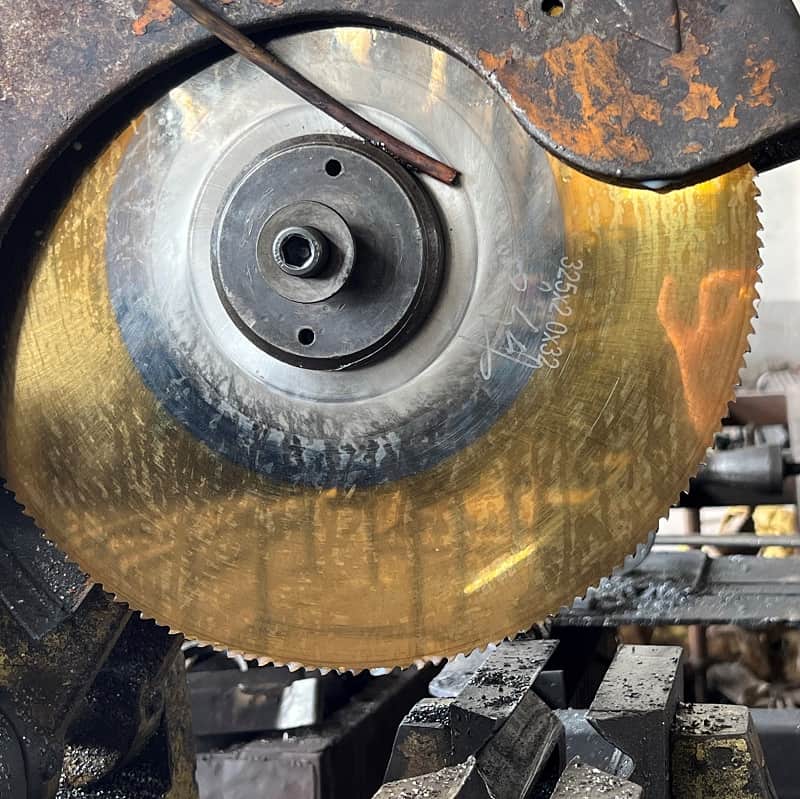
After raw materials are selected, the next step is cutting and forming. Different ringlock components require different production methods.
For example, standards, ledgers, and braces must be cut to accurate lengths. Rosettes, ledger heads, wedge pins, and other connection parts require forming, punching, casting, stamping, or machining depending on the component design.
Accuracy is very important in this stage. If the length, hole position, or connection shape is inaccurate, the final scaffold may become difficult to assemble or may not fit properly with other components.
Good manufacturing control helps ensure that ringlock parts are interchangeable and easy to use on site.
Step 3: Rosette and Connection Part Production
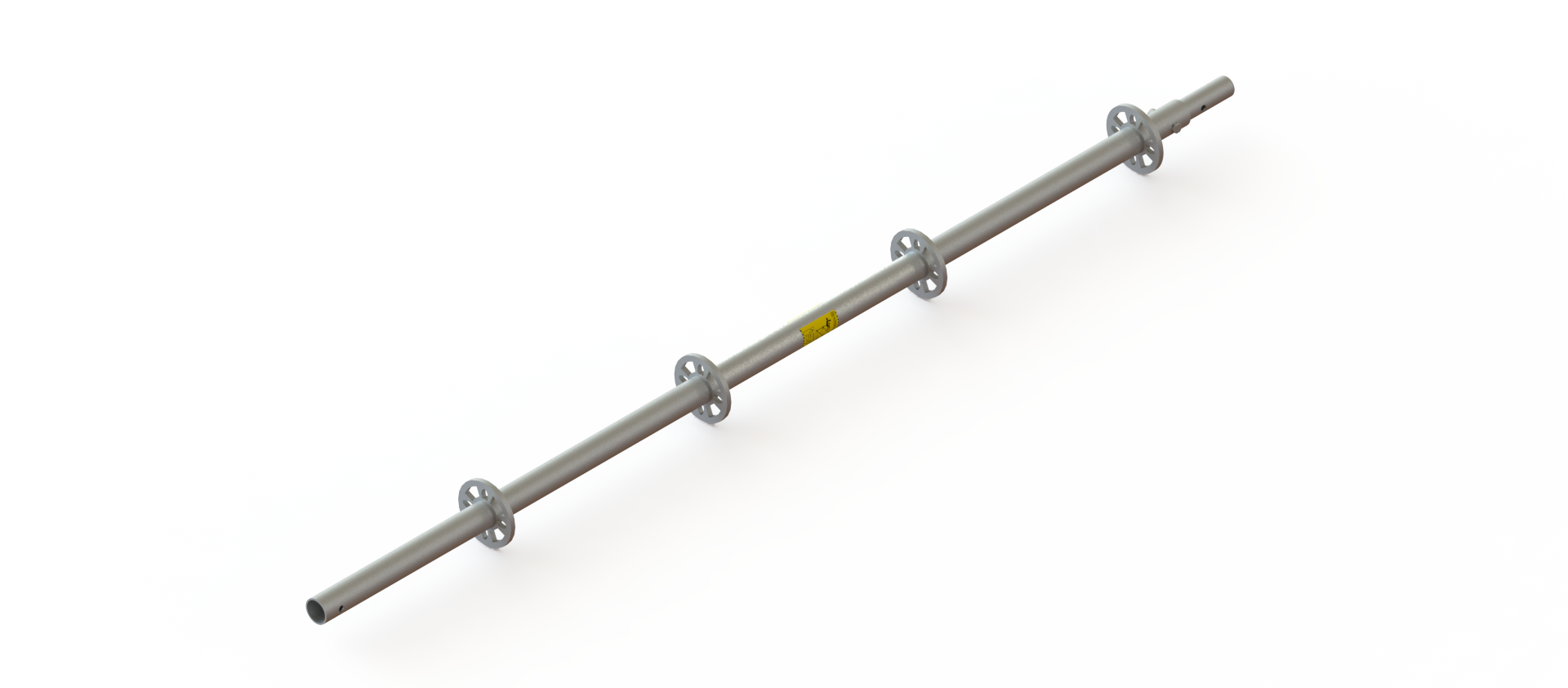
The rosette is the core connection point of ringlock scaffolding. It is usually fixed onto the vertical standard at regular intervals. During assembly, ledgers and diagonal braces connect to the rosette using wedge heads or locking pins.
Because the rosette transfers loads between vertical, horizontal, and diagonal members, its material quality, thickness, hole accuracy, and welding position are critical.
Other connection parts, such as ledger heads and wedge pins, also need consistent dimensions. Even small deviations can affect assembly efficiency and system stability. For this reason, reliable ringlock scaffolding production requires strict control of connection components before welding.
Step 4: Welding and Assembly
Welding is one of the most important steps in the ringlock scaffolding manufacturing process. Components such as rosettes, ledger heads, brace ends, collars, and brackets must be welded accurately and firmly.
A good weld should have stable penetration, clean appearance, and consistent strength. Poor welding may lead to weak connection points, dimensional errors, or quality problems during repeated use.
For ringlock scaffolding, welding quality directly affects:
- Load transfer
- Connection stability
- Assembly accuracy
- Product durability
- Long-term safety performance
At APAC Scaffold, welding quality is carefully controlled during production to help ensure that ringlock components meet project requirements and perform reliably on site.
Step 5: Surface Treatment
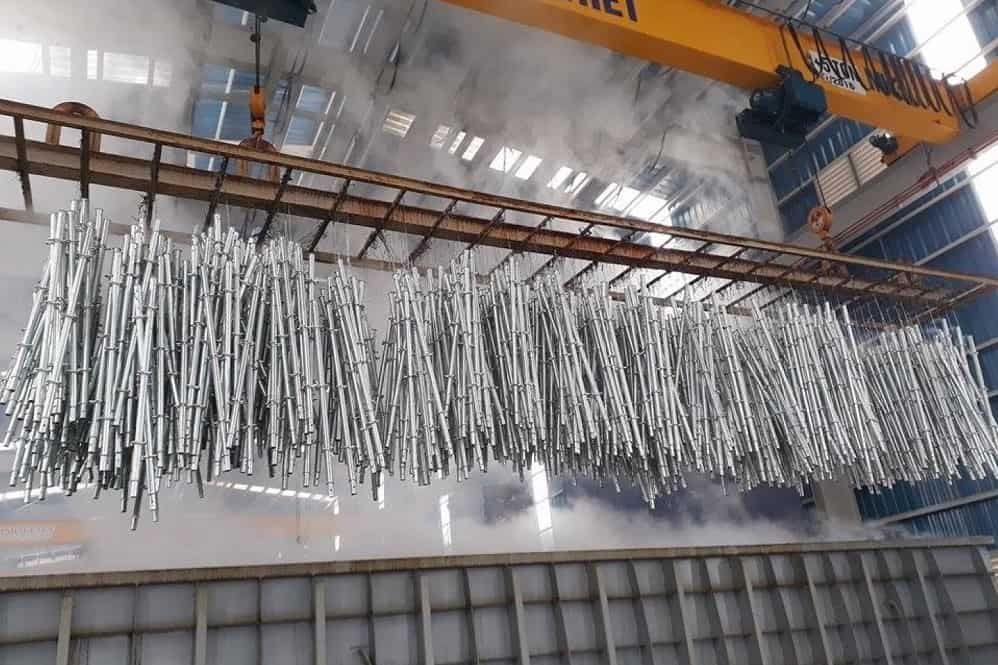
After fabrication, ringlock scaffolding components usually receive surface treatment to improve corrosion resistance. The most common finish for high-quality ringlock scaffolding is hot-dip galvanizing.
Hot-dip galvanizing is often used for products that have already been fabricated into their final shape and will be exposed to corrosive environments. ASTM A123 is widely used for hot-dip galvanized coatings on iron and steel products, while ASTM A153 is commonly used for certain hardware and fasteners.
For ringlock scaffolding, hot-dip galvanizing is valuable because the system has many welded areas, rosettes, wedge connections, holes, and corners. Galvanizing after fabrication helps protect these areas from rust and corrosion.
A durable galvanized finish is especially important for outdoor construction, coastal projects, industrial maintenance, and scaffold rental fleets.
Step 6: Quality Inspection
Quality inspection is essential before ringlock scaffolding is packed and shipped. Inspection helps confirm that the components are properly made, easy to assemble, and suitable for project use.
Common inspection items may include:
- Material certificate review
- Dimension checks
- Welding inspection
- Surface treatment inspection
- Coating thickness checks
- Assembly fit checks
- Load-related checks when required
- Packaging inspection
For international projects, scaffolding may also need to meet specific standards or customer specifications. EN 12811-1 specifies performance requirements and structural design methods for access and working scaffolds, showing that scaffold performance must be considered at the system level, not only at the individual component level.
Step 7: Packaging and Loading
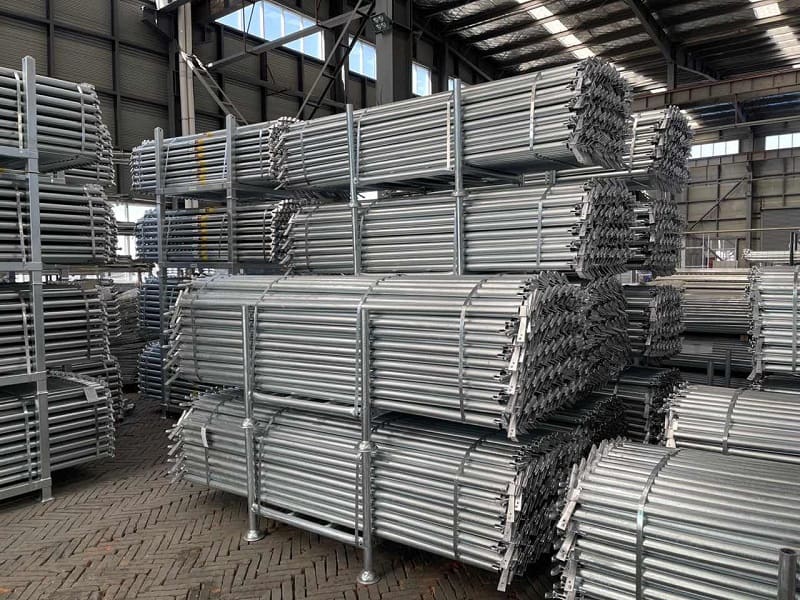
After inspection, the finished ringlock scaffolding components are packaged for storage, container loading, and transportation. Good packaging helps protect the galvanized surface and prevents damage during shipment.
Ringlock scaffolding is usually packed by component type and size, which makes unloading, counting, and site distribution easier for customers. For export orders, proper packaging is especially important because products may pass through long-distance sea transport, warehouse handling, and multiple loading steps before reaching the jobsite.
APAC Scaffold pays attention to packaging and loading to help customers receive products in good condition and reduce handling problems after delivery.
Why Manufacturing Quality Matters
Ringlock scaffolding is a reusable system. It may be assembled, dismantled, transported, and reused many times during its service life. This means manufacturing quality directly affects long-term performance.
High-quality ringlock scaffolding depends on:
- Suitable steel material
- Accurate component dimensions
- Reliable rosette and wedge design
- Strong welding
- Durable surface treatment
- Strict inspection
- Proper packaging
A lower-cost product may look similar at first, but poor material quality, weak welding, inaccurate dimensions, or poor galvanizing can create problems during use. For buyers, choosing a reliable manufacturer is just as important as choosing the right scaffold system.
Conclusion
Ringlock scaffolding manufacturing involves more than cutting and welding steel. A reliable ringlock system requires suitable material selection, accurate forming, precise rosette production, strong welding, durable galvanizing, strict inspection, and proper packaging.
For contractors, rental companies, and procurement teams, understanding how ringlock scaffolding is manufactured can help them choose better products and reduce long-term project risk.
Looking for reliable ringlock scaffolding for your project? Contact APAC Scaffold for galvanized ringlock scaffolding systems, steel planks, base jacks, couplers, and scaffold accessories designed for demanding jobsite use.
FAQ About Ringlock Scaffolding Manufacturing
What is ringlock scaffolding made of?
Ringlock scaffolding is mainly made of steel components such as standards, ledgers, diagonal braces, rosettes, base collars, jacks, platforms, and accessories. The steel grade and surface treatment depend on project requirements.
Why is hot-dip galvanizing used for ringlock scaffolding?
Hot-dip galvanizing helps protect ringlock scaffolding from corrosion. It is especially useful for outdoor, humid, coastal, industrial, and rental applications where components are exposed to repeated handling and weather.
Why is the rosette important in ringlock scaffolding?
The rosette is the main connection point on the vertical standard. It allows ledgers and braces to connect from different directions, helping the system form a stable and flexible scaffold structure.
What affects the quality of ringlock scaffolding?
The main factors include steel material, component dimensions, welding quality, rosette accuracy, surface treatment, inspection, and packaging.
Can APAC Scaffold supply galvanized ringlock scaffolding?
Yes. APAC Scaffold supplies hot-dip galvanized ringlock scaffolding systems and components for construction, infrastructure, industrial maintenance, and access projects.